Visibility
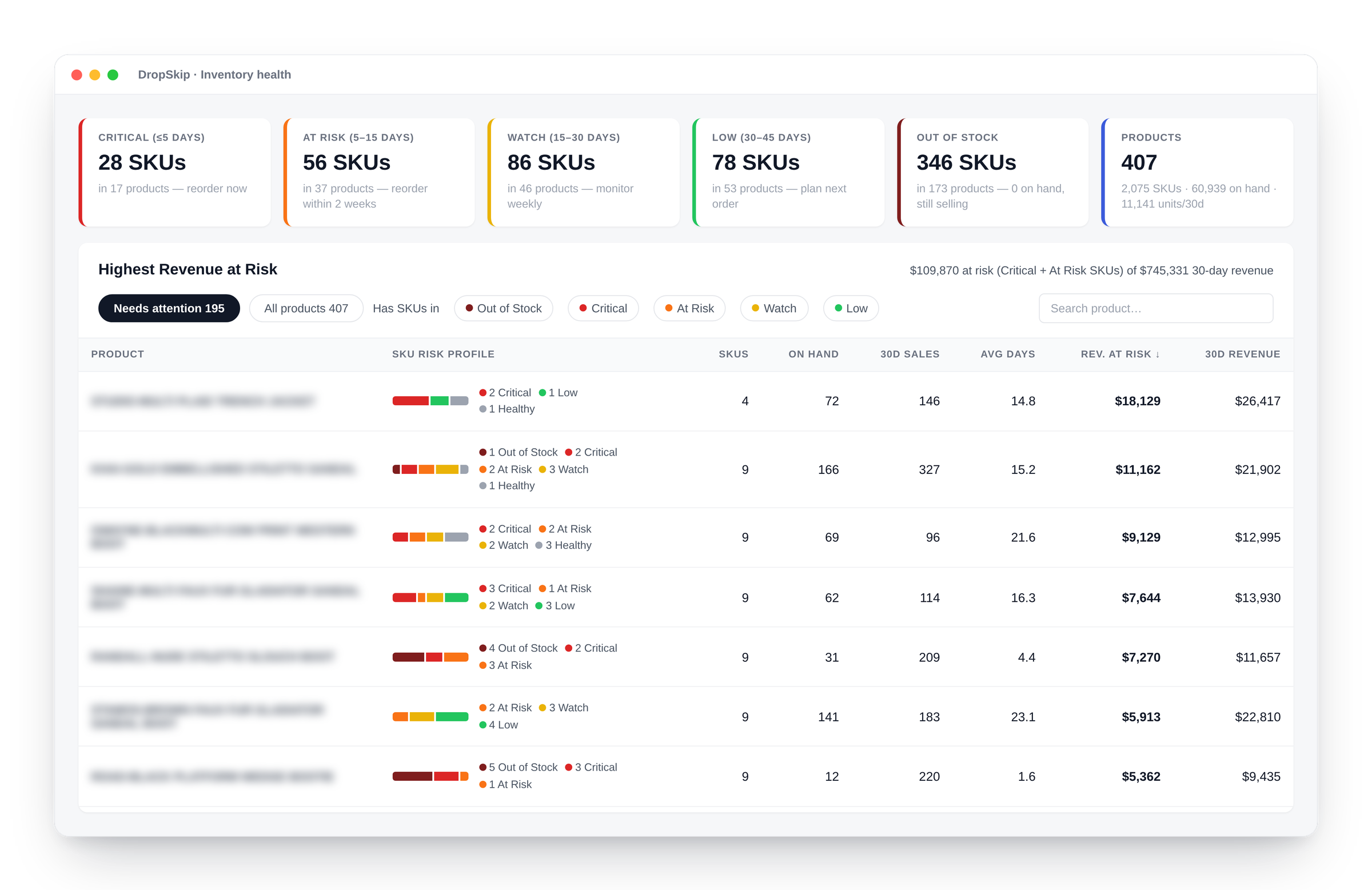
See sales, returns, seasonality, inventory position and health, and incoming supply across the network: what is available, committed, and at risk.

AI-ENABLED SUPPLY CHAIN DECISION LAYER FOR DTC BRANDS
DropSkip® connects demand, sales, inventory, purchase and fulfillment to help you decide what to buy, how much, when, and where. See what needs attention, understand the reasoning, and act with confidence.
Put your capital behind the products and locations that need it.
Built for brand operators managing inventory across products, channels, and locations.
One connected operating view
Connect everyday inventory decisions with the bigger questions of demand, capital, and growth.
See sales, returns, seasonality, inventory position and health, and incoming supply across the network: what is available, committed, and at risk.
Learn what changed in the supply chain and why, what needs attention, the root causes and drivers, and the reasoning behind the next steps.
Evaluate purchase plan by product, channel, and location against demand signals and supplier constraints, before committing capital.
Align stock with expected demand and lock-in purchase orders using recommendations that your team can act on right away
The inventory problem
A bestseller runs short in one warehouse while the same product sits elsewhere. A new purchase order commits more cash, even though a transfer could cover the gap.
DropSkip helps purchasing, planning, and operations assess these situations from the same picture.
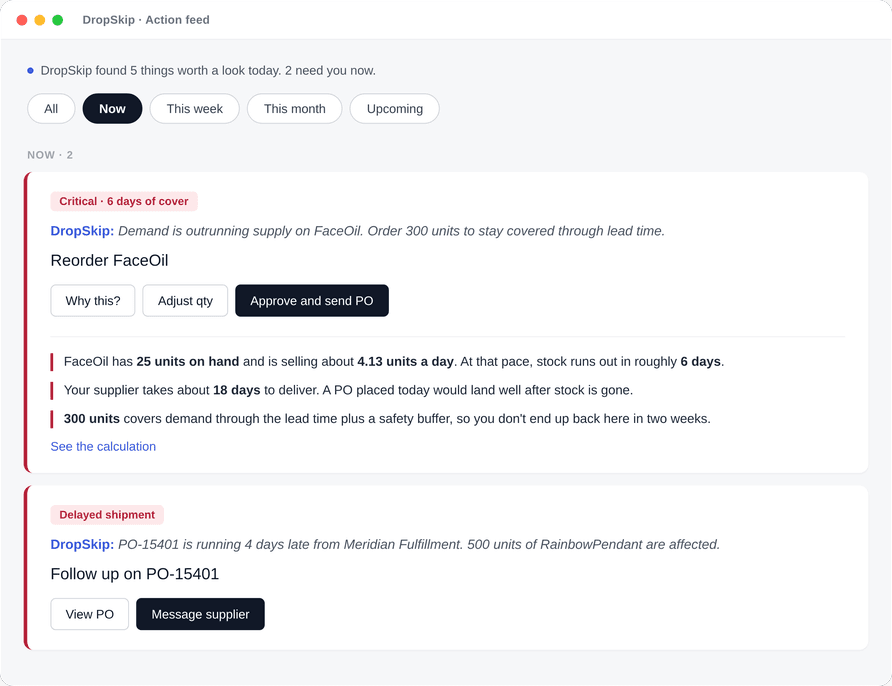
A decision you can explain
Follow one operational signal through the reasoning, trade-offs, and proposed next move.
See stock coverage, expected demand, and incoming supply across locations.
Check whether available stock can support a transfer without creating a shortage elsewhere.
Review quantity, timing, stock availability, and how much new cash each path commits.
Approve, adjust, or dismiss the proposed action with the supporting rationale in view.
Capital-aware planning
Identify where inventory exceeds expected demand and evaluate transfers, purchasing changes, or markdowns.
Surface coverage gaps early enough to consider replenishment or reallocation before availability becomes a problem.
Weigh inventory actions against avoidable expediting, excess holding, and markdown exposure.
Operator control
A recommendation should explain what changed, why it matters, and what the proposed action is intended to address. DropSkip brings that reasoning into the decision so operators can explain their choices across planning, finance, and leadership.
Review the evidence. Adjust the plan. Approve the action.
Practical adoption
A focused route from connected data to useful supply chain decisions, without replacing the operational stack your team relies on.
Connect your existing commerce, inventory, and operational data.
Begin with the inventory questions that matter most to your team.
Agree on data requirements, connections, and rollout steps upfront.
Define success around availability, inventory investment, and operational priorities.
Bring one inventory challenge
We’ll walk through the relevant workflow, explain the reasoning behind the recommendations, and discuss how DropSkip could fit your operations.
Tell us which inventory decision your team needs to make. We’ll keep the demo focused on that operating question.